
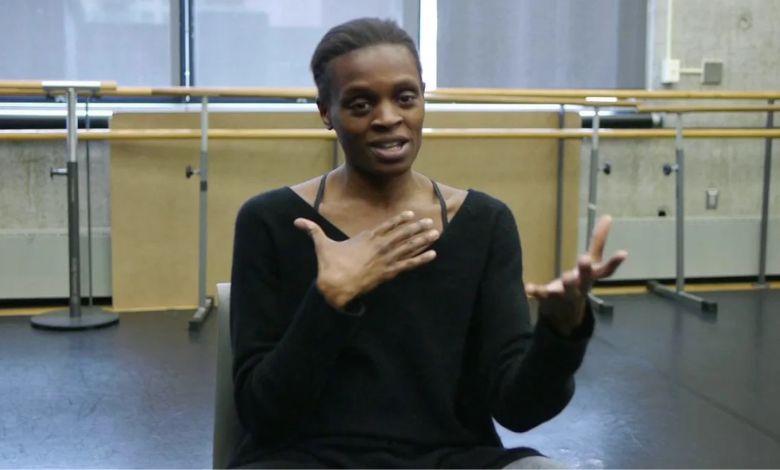
Okwui Okpokwasili is one of the most original and emotionally resonant artists working in contemporary performance today. Known for her powerful fusion of theater, dance, voice, ritual, and memory, she has created a body of work that feels deeply human, intellectually rich, and artistically fearless. Her performances do more than entertain. They invite audiences into complex emotional spaces shaped by history, identity, embodiment, and the lived experiences of women.
Over the years, Okpokwasili has become widely respected for creating multidisciplinary works that center stories often left outside the mainstream. Her art moves between the personal and the political, the physical and the spiritual, the intimate and the collective. That ability to hold many layers at once is what makes her one of the most important voices in experimental performance.
Quick Bio Table
| Fields | Details |
|---|---|
| Full name | Okwui Okpokwasili |
| Birth date | August 6, 1972 |
| Birthplace | The Bronx, New York |
| Profession | Performer, choreographer, writer |
| Education | B.A. from Yale University |
| Notable training | Studied Butoh with Min Tanaka in Japan |
| Known for | Bronx Gothic, Poor People’s TV Room, Pent-Up: A Revenge Dance |
| Major honor | MacArthur Fellow |
| Frequent collaborator | Peter Born |
Who Is Okwui Okpokwasili?
Born in the Bronx, New York, Okwui Okpokwasili is a performer, writer, and choreographer whose work reflects a deep commitment to storytelling through the body. Her creative practice is rooted in movement, sound, memory, and emotional intensity. Rather than following traditional stage formulas, she creates immersive performance experiences that challenge audiences to feel, reflect, and engage on a deeper level.
Her background has played an important role in shaping her artistic voice. Across her work, she returns to themes such as Black womanhood, migration, girlhood, vulnerability, power, and historical remembrance. These themes are not treated in a distant or academic way. Instead, she transforms them into living, breathing performance.
Also Read: Lionel Boyce: Career, Bio, Acting Style, and Rising Influence
A Distinctive Artistic Style
What makes Okwui Okpokwasili stand out is the way she blends disciplines without losing clarity or emotional force. Her work exists somewhere between theater, dance, installation, and live art. She uses gesture, repetition, stillness, breath, song, and physical endurance to build meaning. As a result, her performances often feel immersive and haunting, as if the audience is not simply watching a story unfold but stepping inside it.
There is also a remarkable honesty in the way she uses the body as an expressive tool. In her performances, movement becomes language. Silence becomes structure. Voice becomes memory. That artistic approach has helped her build a reputation as one of the most distinctive multidisciplinary performers of her generation.
The Works That Shaped Her Career
Pent-Up: A Revenge Dance
One of the works that helped establish Okpokwasili’s artistic identity was Pent-Up: A Revenge Dance, created in collaboration with Peter Born. The piece introduced audiences to her bold, layered approach to performance and helped position her as a major force in experimental theater and dance. It was emotionally charged, physically expressive, and impossible to ignore.
Bronx Gothic
Among all of her works, Bronx Gothic remains the one most closely associated with her name. This remarkable performance explores girlhood, intimacy, memory, and friendship through a deeply embodied theatrical form. Centered on the emotional lives of two young Black girls in the Bronx, the piece uses movement, voice, humor, tension, and vulnerability to create something unforgettable.
What makes Bronx Gothic so powerful is its refusal to simplify memory. Instead of presenting the past in a clean narrative, Okpokwasili allows it to remain messy, physical, and emotionally alive. The result is a work that feels both personal and universal.
Poor People’s TV Room
Another major work in her career, Poor People’s TV Room, expands her focus beyond personal memory into a larger political and historical framework. The piece draws from Nigerian history and the experiences of women, blending ritual, media, performance, and resistance into a layered theatrical world. It is a powerful example of how Okpokwasili turns history into lived experience through performance.
Also Read: Richard Taubman: A Visionary Entrepreneur and Influential Leader
Why Bronx Gothic Still Resonates
Bronx Gothic continues to matter because it captures something rarely expressed with such honesty: the emotional intensity of girlhood and the complicated terrain of memory. The work does not rely on traditional storytelling alone. It uses the body, voice, and silence to reveal feelings that words often cannot fully explain.
This is one of the reasons the performance has had such lasting impact. It speaks to identity, race, adolescence, loneliness, tenderness, and desire in ways that feel raw and unforgettable. Even years after its debut, it remains a defining work in contemporary performance.
Awards and Recognition
Okwui Okpokwasili’s acclaim has grown through sustained artistic excellence rather than passing attention. Her work has received major honors, including Bessie recognition and a MacArthur Fellowship. These achievements reflect the depth of her influence and the respect she has earned within the worlds of performance, choreography, and contemporary art.
But awards tell only part of the story. Her true importance lies in the way her work has expanded the possibilities of performance itself. She has shown that live art can be physically demanding, emotionally intimate, politically aware, and aesthetically innovative all at once.
Why Her Work Matters Today
In a time when audiences are looking for art that feels meaningful as well as original, Okwui Okpokwasili’s work stands out for its depth and courage. She creates performances that do not chase easy answers. Instead, they ask viewers to sit with complexity, emotion, and history.
Her work also matters because it centers voices and experiences that have too often been overlooked. Through her choreography, writing, and performance, she has opened space for a more expansive understanding of womanhood, Blackness, memory, and artistic expression. That makes her not only a remarkable performer, but also a lasting cultural force.
FAQ’s
Who is Okwui Okpokwasili?
Okwui Okpokwasili is an American performer, writer, and choreographer known for multidisciplinary performance work.
What is Okwui Okpokwasili best known for?
She is best known for Bronx Gothic, along with other acclaimed works like Poor People’s TV Room and Pent-Up: A Revenge Dance.
What kind of artist is Okwui Okpokwasili?
She is a multidisciplinary artist whose work combines theater, dance, voice, movement, and storytelling.
Why is Okwui Okpokwasili important?
She is important because her work has expanded contemporary performance by bringing together emotional depth, physical expression, and cultural history.
Conclusion
Okwui Okpokwasili is far more than a performer with critical acclaim. She is a singular artistic presence whose work has changed the way audiences experience movement, memory, and live storytelling. Through pieces like Bronx Gothic, Pent-Up: A Revenge Dance, and Poor People’s TV Room, she has created a language of performance that is intimate, fearless, and unforgettable.
Her importance lies not just in the awards she has earned, but in the worlds she creates onstage. Okwui Okpokwasili continues to prove that performance can be poetic, political, vulnerable, and deeply transformative all at once.
Also Read: Oliver Orion Ocasek: A Visionary in Music and Innovation





One Comment