Who Is Angelina Davydova? Environmental Journalism, Climate Policy, and Public Work

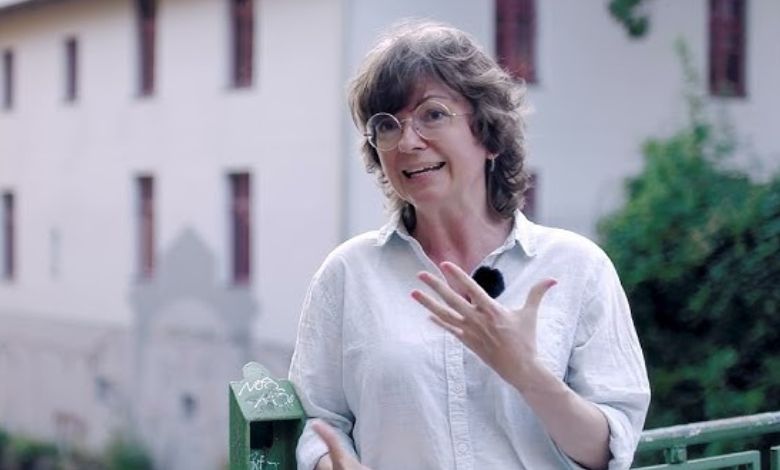
Angelina Davydova is an environmental and climate journalist, writer, moderator, trainer, and podcast host known for her long-term work on climate policy, environmental communication, and international climate negotiations. Her public profile is built around journalism rather than celebrity: she reports, explains, moderates, teaches, and connects climate debates across Russia, Europe, Central Asia, and international policy spaces. Clean Energy Wire describes her as an environmental and climate journalist who writes for Russian and international media, NGOs, and think tanks, and as a co-host of the English-language podcast The Eurasian Climate Brief.
Davydova is also known for observing the United Nations climate negotiation process. Public profiles from the World Future Council and Global Diplomacy Lab state that she has followed or observed the UNFCCC climate negotiations since 2008. This long engagement gives her work a strong policy dimension, because climate journalism often requires the ability to translate technical negotiations, national commitments, finance debates, and environmental impacts into language that wider audiences can understand.
Early Life and Education
Publicly available information about Angelina Davydova’s early private life is limited. Some professional biographies identify her as born in 1978 in Saint Petersburg, Russia, but detailed information about her parents, childhood, or private family background is not widely documented in authoritative sources. A fact-based biography should therefore avoid personal speculation and focus on the professional record that is clearly available.
Davydova’s academic background is connected to economics. Public profiles state that she earned an M.A. in Economics from the St. Petersburg State University of Economics and Finance. This educational foundation is relevant to her later work because climate journalism is not only about environmental science; it also involves economics, energy systems, public policy, finance, industry, and development.
Journalism Career and Climate Focus
Angelina Davydova’s journalism career focuses on climate change, environmental policy, sustainability, civil society, and media. Global Diplomacy Lab describes her as an environmental journalist from Saint Petersburg who contributes to Russian and international media, including Kommersant, the Thomson Reuters Foundation, and Science magazine. The same profile notes that she specializes in the economic and political aspects of global and Russian climate policy.
This specialization places her in a specific area of journalism: explaining how climate policy works in practice. Climate reporting often requires more than covering weather events or environmental damage. It includes tracking government pledges, energy transitions, emissions targets, corporate behavior, civil society responses, adaptation needs, and international negotiations. Davydova’s work sits at this intersection of journalism, policy, and public education.
Clean Energy Wire has also identified her as its ambassador for Russia, Central Asia, and Eastern Europe. This regional framing is important because climate debates often differ by geography. Russia, Central Asia, and Eastern Europe face distinct questions around fossil fuel dependency, energy transition, climate adaptation, environmental governance, and civic participation. Davydova’s public role helps connect these regional issues with broader international climate discussions.
Also Read: Michael Attenborough: Richard Attenborough’s Only Son and Theatre Legacy
UN Climate Negotiations and Policy Communication
One of the clearest parts of Angelina Davydova’s public record is her long association with UN climate negotiations. The World Future Council states that she has been an observer with the UN climate negotiations since 2008, while the Global Diplomacy Lab says she has been covering the UN climate negotiations since the same year.
This matters because the UNFCCC process is complex and often difficult for general audiences to follow. Climate conferences involve diplomacy, science, law, finance, adaptation, mitigation, loss and damage, and national political interests. Journalists who follow the process over many years build institutional memory, which helps them explain not only what happened at one summit, but how decisions fit into a longer global timeline.
Davydova’s work can be understood as climate translation in the public interest. She takes specialized policy discussions and makes them accessible to journalists, civil society groups, students, NGOs, and readers who need reliable information about climate decisions and their consequences.
Work in Environmental Journalism Development
Beyond writing, Angelina Davydova has contributed to environmental journalism training and communication. UC Davis identified her as director of the German-Russian Office of Environmental Information in St. Petersburg and described her work as helping develop environmental journalism in Russia and neighboring countries.
Her professional development also includes international fellowships and academic programs. UC Davis notes that she was a Reuters Foundation Fellow at Oxford University in 2006 and participated in the Beahrs Environmental Leadership Program at UC Berkeley in 2012. These experiences support the international nature of her career and show her connection to journalism, environmental leadership, and academic exchange.
The role of training is especially important in environmental journalism. Climate reporting requires accuracy, but it also requires practical skills: reading scientific reports, interviewing experts, avoiding misinformation, understanding policy documents, and communicating uncertainty responsibly. Davydova’s public work as a trainer and lecturer supports this broader professional ecosystem.
Also Read: Tim Jessell: From Commercial Artist to Children’s Book Illustrator
The Eurasian Climate Brief and Podcast Work
Angelina Davydova is also a co-host of The Eurasian Climate Brief, an English-language podcast focused on climate issues across Eurasian regions. The World Future Council and Clean Energy Wire both identify her with the podcast, connecting it to her broader work in climate communication.
Podcasting allows climate journalism to reach audiences differently from print reporting. Audio formats can make policy discussions more conversational, provide context through interviews, and create space for regional voices that may not always be visible in global climate coverage. For Angelina Davydova, podcasting fits naturally with her work as a journalist, moderator, trainer, and public communicator.
Berlin-Based Work and Recent Roles
Public profiles state that Angelina Davydova was based in St. Petersburg until mid-March 2022 and is now based in Berlin, Germany. Clean Energy Wire, the World Future Council, and other institutional profiles present Berlin as her current public base.
Her recent roles include work connected to Media in Cooperation and Transition in Berlin, climate journalism coordination with n-ost, and participation in networks focused on climate and environmental communication. The n-ost profile lists her professional areas as online/multimedia, print/text, translation, education, and project management, with topical expertise in environment, climate, media, and information society.
These roles show that her career is not limited to traditional reporting. She works across journalism, training, project coordination, cross-border media networks, and public communication. That combination reflects the way climate journalism has expanded: reporters increasingly work as explainers, conveners, educators, and international collaborators.
Philanthropy / Public Engagement
There is limited verified public information about a personal charity foundation or formal philanthropic organization directly operated by Angelina Davydova. It would therefore be inaccurate to describe her primarily as a philanthropist without stronger documentation.
Her documented public engagement is instead visible through journalism, education, moderation, podcasting, climate communication, and institutional work. The World Future Council states that she gives guest lectures and seminars at universities in Russia, Germany, and the United States and organizes trainings on environmental and climate journalism, writing, and communication for media and NGO professionals.
This kind of work is public service in a professional sense. It contributes to climate literacy, strengthens environmental reporting, and helps journalists and civil society groups communicate complex climate issues more clearly.
Public Perception and Misconceptions
One misconception is that Davydova is only a Russian environmental journalist. While her work began strongly in Russian environmental and climate reporting, her current public profile is international. She writes for international media and organizations, works from Berlin, co-hosts an English-language podcast, and engages with climate issues across Europe, Central Asia, and global policy spaces.
Another misconception is that climate journalism is the same as activism. Davydova’s public work includes journalism, analysis, moderation, education, and policy communication. These activities may overlap with public concern about climate change, but they are not identical to partisan activism. Her professional profile is best understood through reporting, expertise, and communication.
A third misconception is that all personal details about her life are public. They are not. Reliable sources document her education, professional affiliations, journalism work, fellowships, and public roles, but do not provide extensive private family information. A trustworthy biography should not invent details about her personal life.
Legacy and Future
Angelina Davydova’s legacy is still developing, but her contribution to climate journalism is already clear. She has helped explain climate policy across linguistic, regional, and institutional boundaries. Her long observation of UN climate negotiations, her work in Russian and international media, and her role in environmental journalism training all contribute to a professional record centered on climate literacy and public understanding.
Her future work should be discussed carefully and only through verified projects or official profiles. Based on current public information, she continues to be associated with environmental journalism, climate communication, podcasting, university lectures, and cross-border media networks. Claims about future books, institutional appointments, or long-term plans should be verified before publication.
Also Read: Aimee Ginsburg Biography: Journalist, Author, and Theodore Bikel’s Wife
FAQ’s
Who is Angelina Davydova?
Angelina Davydova is an environmental and climate journalist, author, moderator, trainer, and podcast host.
Where is Angelina Davydova from?
Public profiles identify her as from Saint Petersburg, Russia.
Where is Angelina Davydova based now?
Clean Energy Wire and other public profiles list her as based in Berlin, Germany.
Has Angelina Davydova covered UN climate negotiations?
Yes. Public profiles state that she has observed the UNFCCC climate negotiation process since 2008.
Is there public information about Angelina Davydova’s family?
Public information about her private family life is limited, so biographies should avoid guessing personal details.
Conclusion
Angelina Davydova is an environmental and climate journalist whose career connects reporting, policy analysis, public education, and international climate communication. Born in Saint Petersburg according to public profiles and trained in economics, she built a career covering environmental and climate issues for Russian and international audiences. Her long-running observation of UN climate negotiations since 2008 is one of the strongest markers of her expertise.
Her work extends beyond article writing. She has been involved in journalism training, podcasting, university lectures, cross-border media networks, and environmental communication projects. Publicly available information about her private life is limited, but her professional record is well documented through institutional profiles and climate-focused organizations.
A balanced biography of Angelina Davydova should therefore present her as a climate journalist and public communicator whose importance lies in making environmental policy understandable across regions, languages, and professional communities.