
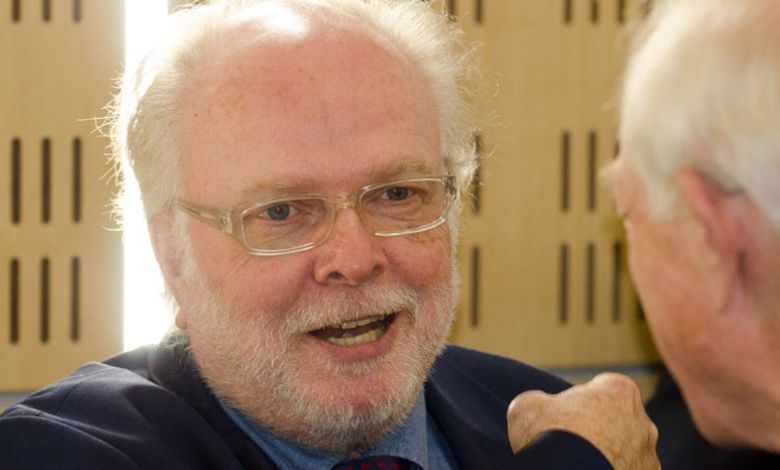
Michael Attenborough, the only son of renowned British actor-director Richard Attenborough and actress Sheila Sim, is an accomplished director and figure in the world of theatre. While his father’s legacy in film, most notably for his directorial work on Gandhi, is well known, Michael has established himself as a key figure in the theatre world. Known for his contributions to the Royal Shakespeare Company (RSC), his career stands as a testament to his talent, distinct from the shadow of his illustrious parents.
Despite his accomplished career, Michael Attenborough has largely remained out of the spotlight compared to his family, choosing to focus more on his work in the theatre than on the public limelight. In this article, we explore Michael Attenborough’s life, career, and contributions to British theatre, as well as his family legacy.
Early Life and Family Background
Michael John Attenborough was born on August 14, 1950, in London, England, to Sheila Sim, an actress known for her roles in the 1940s and 1950s, and Richard Attenborough, one of Britain’s most celebrated film directors and actors. As the only child of such prominent figures in the entertainment industry, Michael’s upbringing was undoubtedly shaped by his parents’ careers. While Richard Attenborough’s fame as a director and actor overshadows most of his life, Sheila Sim also left her mark on British cinema with her early roles, including her role as the wife of Richard III in Laurence Olivier’s 1955 film.
Growing up in a family deeply embedded in the arts, Michael was exposed to creativity, storytelling, and performance from a young age. However, despite this, he did not immediately pursue a career in the film industry, and instead chose to focus on the theatre, where his true passion lay.
While much of his early life remains private, his family background, particularly his relationship with his parents, has shaped his public persona. The influence of both his mother’s early career and his father’s monumental achievements in film would play a crucial role in shaping Michael’s career trajectory, albeit in a different artistic domain.
Also Read: Ava Eliot Jackman: Biography, Family Background, and Future
Education and Early Career
Michael Attenborough attended University College London, where he studied English Literature. After graduating, he went on to pursue a career in theatre, working at various theatres before landing his first major directing role. His early exposure to the world of acting and directing was facilitated by his family connections, but he worked diligently to carve his own path in the theatre world.
His education and early career provided him with a broad base in literature and drama, which would later influence his directing style. His father’s influence is often cited, not only in terms of guidance but also in terms of his worldview, which Michael Attenborough has often reflected in his own work as a director. Michael’s approach to theatre focused on classical works, contemporary adaptations, and fostering new talent through directing.
In 1976, Michael Attenborough’s directing career took a leap forward when he became involved with the Royal Shakespeare Company (RSC). The RSC is one of the most prestigious theatre companies in the world, known for its commitment to the works of William Shakespeare and the cultivation of emerging talent in the theatre industry. Michael’s association with the RSC further solidified his place in British theatre, and he became known for his work on Shakespearean productions.
Career in Theatre: Notable Works and Contributions
As a director, Michael Attenborough has worked on a range of notable productions. His work is especially well-known for his direction of classical theatre, with a particular focus on Shakespeare’s works. He gained recognition for his creative yet respectful approach to Shakespeare’s plays, bringing modern sensibilities to these centuries-old pieces while retaining their essence.
One of his notable achievements was his direction of the highly acclaimed production of The Tempest at the Royal Shakespeare Theatre in 1987. His adaptation received praise for its innovative approach and brought new life to one of Shakespeare’s most iconic works.
Michael’s contributions to the theatre world extended beyond just the classics, as he was also known for his work on contemporary plays. His ability to balance the old and the new within the context of the theatre has earned him respect within the industry. His creative approach helped revitalize many pieces, and his direction of new plays has earned him further recognition.
In addition to his work with the RSC, Michael has also directed productions for various regional theatres and abroad. He has also been involved in bringing fresh voices into the theatre scene by mentoring younger generations of directors and playwrights.
Public Perception and Misconceptions
Despite his impressive credentials, Michael Attenborough has largely stayed out of the public eye, particularly in comparison to his famous parents. This has led to some misconceptions about his career.
One common misunderstanding is that Michael’s career was facilitated entirely by his family connections. While it is undeniable that Michael grew up in a family steeped in the arts, his success in the theatre world has been the result of his own talent, hard work, and dedication. He made a conscious decision to pursue theatre over film, marking his career as distinctly separate from the path his father, Richard Attenborough, took in cinema.
Another misconception is that Michael Attenborough’s career has been solely about directing Shakespearean plays. While his work with Shakespeare is well-regarded, he has also directed contemporary works and plays by other influential playwrights. His range as a director extends beyond the traditional, showcasing his versatility in the field of theatre.
Philanthropy and Public Engagement
Michael Attenborough has kept a relatively low profile when it comes to public philanthropy. Unlike his father, Richard Attenborough, who was well-known for his philanthropic work, particularly for human rights and charitable causes, there is limited documentation about Michael’s involvement in charitable or public service initiatives. This could be due to his preference for focusing on his career in the arts rather than engaging in public activism.
While his father’s philanthropic efforts were well-documented, Michael’s public contributions have been more focused on his professional work in theatre. He has been involved in the arts community and has supported initiatives related to theatre and performance, but no significant charitable foundations or causes directly associated with him have been reported in public records.
Legacy and Future
Michael Attenborough’s legacy is still being written, particularly within the theatre world. While his fame may never reach the same heights as his father’s, his contributions to British theatre have been substantial. He is respected as a director who has elevated the works of Shakespeare and introduced new generations to classical theatre. His influence on the RSC and other regional theatres speaks to his commitment to preserving and innovating within the field of theatre.
Looking toward the future, Michael Attenborough’s career is likely to continue as a director and mentor. His influence within the theatre world, particularly in terms of modern interpretations of classical works, has cemented his place as a respected figure. His work continues to inspire emerging directors and actors, and his legacy will likely persist through the next generation of British theatre.
As he grows older, Michael’s contributions to the theatre world may shift more toward mentoring and preserving the history of British theatre, as well as ensuring that Shakespeare’s works continue to find relevance in today’s world.
Also Read: Bonni Sue Chalkin: A Fact‑Based Profile
FAQ’s
Who is Michael Attenborough?
Michael Attenborough is a British theatre director, the only son of actress Sheila Sim and actor-director Richard Attenborough.
What is Michael Attenborough known for?
He is best known for his work as a theatre director, particularly with the Royal Shakespeare Company and his work in reviving classic theatre productions.
What impact did Richard Attenborough have on Michael’s career?
While Richard Attenborough was an influential figure in Michael’s life, Michael established his own career through his contributions to British theatre and directing, often away from the limelight.
Does Michael Attenborough have any siblings?
Michael Attenborough is the only child of Richard Attenborough and Sheila Sim.
Has Michael Attenborough worked in film?
While Michael is primarily known for his work in theatre, he has contributed to film in the context of his father’s legacy, but his career is largely focused on directing in the theatre.
What is Michael Attenborough’s family background?
Michael Attenborough’s family is deeply rooted in the arts. His father, Richard Attenborough, was an actor and director, and his mother, Sheila Sim, was an actress. Michael’s grandfather, Arthur Attenborough, also worked in the arts.
Is Michael Attenborough still active in the theatre?
Yes, Michael Attenborough continues to direct and produce theatre productions, maintaining his contribution to the British arts community.
Conclusion
Michael Attenborough, the son of Richard Attenborough and Sheila Sim, has built a respected career in British theatre, directing and mentoring countless productions. While he has remained relatively out of the public eye compared to his famous parents, his work at the Royal Shakespeare Company and his approach to both classical and contemporary theatre have solidified his reputation as one of the leading directors in the UK.
His family legacy is undeniable, but Michael has forged his own path in the arts, proving that his talent and vision as a director are independent of his father’s fame. Although his philanthropic endeavors are not as well-documented, his contributions to the theatre community through direction, mentorship, and innovation are his lasting legacy.
As Michael continues his career, his influence will undoubtedly persist in the theatre world, where he remains a pivotal figure. His future, like his past, will likely see him as a guiding force in the British theatre scene, helping to mentor the next generation while continuing to bring innovative approaches to the stage.




One Comment